Are your KPIs helping your operation optimise, or are they hiding the real constraint?
How organisational policies, silo metrics, and planning assumptions can limit the value generated by integrated mine-to-market optimisation
Introduction
Most mining organisations understand constraints. Technical teams are familiar with the theory of constraints from an engineering, production, and process improvement perspective. They understand that a value chain has limiting factors, that bottlenecks shift over time, and that improving a non-bottleneck activity does not necessarily improve whole-of-business performance.
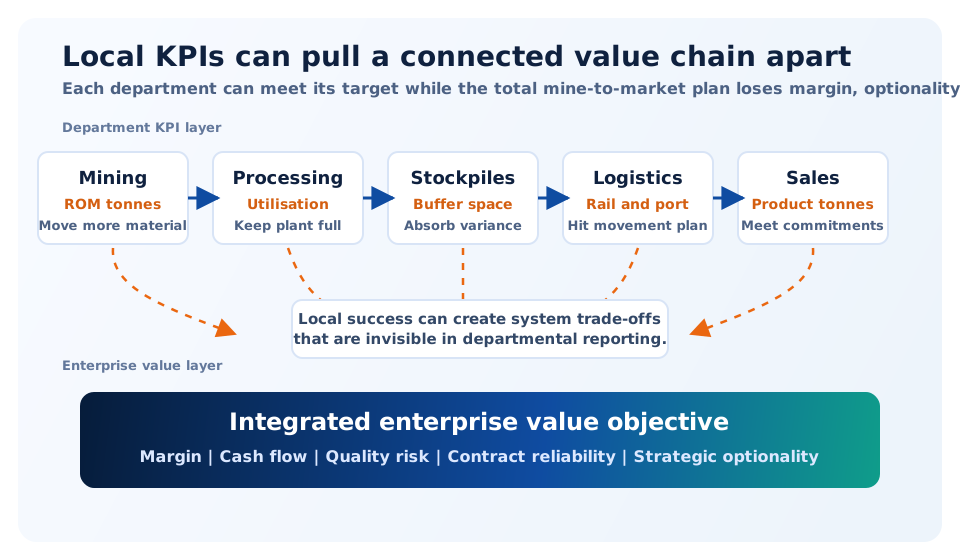
The challenge is that mining businesses are often managed through local key performance indicators that reward departmental efficiency rather than enterprise value. Washplant utilisation, excavator utilisation, rail utilisation, queue time, ROM tonnes, plant throughput, product tonnes, and similar metrics can each be useful in context. However, when these measures dominate planning and operational decision making, they can encourage local optimisation at the expense of the total value chain.
Local optimisation is not system optimisation. A plan that makes one asset appear efficient can still reduce margin, increase quality risk, consume scarce stockpile capacity, restrict product optionality, or force the business into a sales strategy that is not aligned with the resource.
BlendOpt is designed to support integrated mine-to-market decision making. It can help mining organisations evaluate how mining, processing, stockpiling, logistics, and sales decisions interact. However, the value generated by optimisation depends on more than the software model. It also depends on whether the organisation is prepared to challenge the internal policies, planning assumptions, and KPI structures that may be creating the problem in the first place.
Defining the right optimisation problem
When mining companies approach Paradyn, they often describe a well-formed planning or scheduling problem. The operation may want to improve CHPP throughput, reduce queue time, improve product consistency, maintain rail performance, increase washplant utilisation, or better align product tonnes with the sales plan.
These are valid operational concerns, but they may not always describe the true constraint on value. The perceived bottleneck might be a production asset. The true constraint might be product quality, sulphur, deleterious elements, stockpile capacity, campaign timing, vessel commitment, marketing flexibility, logistics sequencing, contract structure, or a policy that prevents the business from considering a more valuable alternative.
This distinction matters. If the wrong constraint is optimised, the organisation may receive an efficient answer to the wrong question. A processing plant can be highly utilised while the business sells the wrong product mix. A mine can deliver ROM tonnes while reducing future blending optionality. A logistics system can perform to plan while moving material that creates avoidable quality or margin risk downstream.
A critical first step in any optimisation project is therefore to define the decision problem in value-chain terms. The question is not simply: "How do we make this department more efficient?" The more important question is: "Which decisions across the value chain are limiting cash flow, margin, risk, or strategic optionality?"
Why local KPIs can hide the true constraint
Local KPIs are not inherently wrong. They are often necessary for safe, accountable, and disciplined operations. Problems arise when local KPIs become substitutes for value-chain performance.
For example, a processing team may be encouraged to maximise washplant utilisation. In many situations this is appropriate. However, there are also circumstances where bypassing material, changing the processing campaign, accepting lower utilisation, or preserving plant capacity for a later period may create a better commercial outcome.
Similarly, a mining team may be rewarded for ROM tonnes moved, equipment utilisation, or reduced hang and queue time. These metrics can support productivity, but they do not always measure whether the right material is being mined at the right time for the right product strategy. High production performance can still reduce enterprise value if it overwhelms constrained stockpiles, creates unusable blends, or accelerates material that has limited market value under current sales commitments.
Marketing and sales teams can face the same issue from a different direction. A product plan that appears attractive from a revenue, customer, or contract perspective may unintentionally commodify the resource, reduce optionality, or impose product specifications that are difficult for the operation to meet without additional cost or risk.
These issues are common in complex operations because each team is acting rationally within its own performance framework. The misalignment is usually not caused by poor capability. It is a predictable outcome of siloed accountability, legacy planning processes, and performance measures that do not fully represent the interactions between mining, processing, logistics, stockpiling, and sales.
The bottleneck may not be where the organisation thinks it is
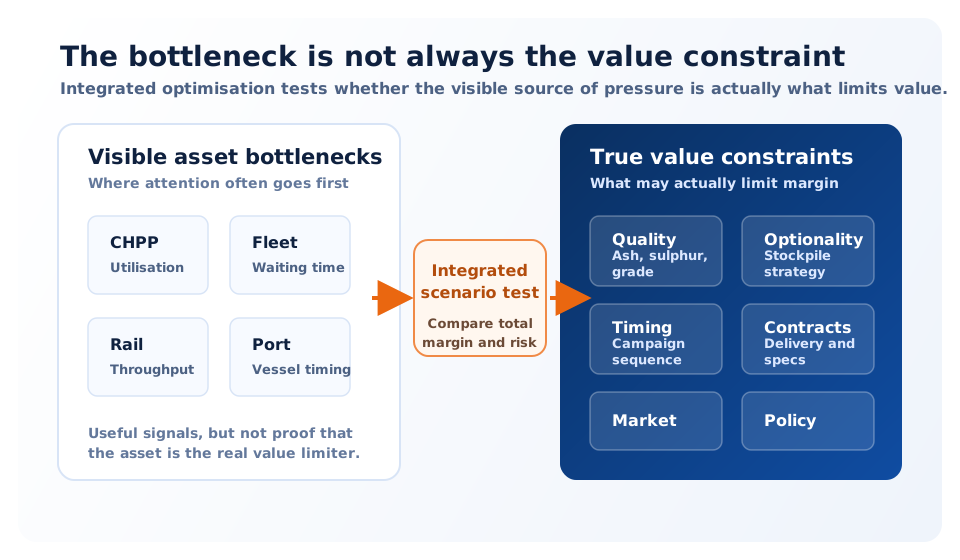
Mining organisations often view bottlenecks through a production lens. The constraint is commonly assumed to be the asset with the most visible waiting time, queueing, utilisation pressure, or throughput limit. In many operations this leads attention toward the CHPP, primary excavators, rail, port, or other high capital assets.
These assets may be important constraints, but they are not always the value constraint. In an integrated value chain, the real limit on value can be less visible.
The true constraint may be a quality attribute within the resource. It may be total sulphur, ash, moisture, deleterious elements, recovery, hardness, product grade, or another property that limits the products that can be made and sold. It may be stockpile capacity, reclaim sequencing, or the ability to maintain separation between material types. It may be logistics timing, vessel arrival patterns, contract dates, or the relationship between product specifications and market demand.
In some cases, the true constraint is not physical at all. It may be a planning policy, a fixed product assumption, an internal rule about campaign size, a marketing preference for a single product, or a decision process that prevents alternative strategies from being compared on a consistent value basis.
If the organisation treats every bottleneck as a production bottleneck, it may invest effort in improving the wrong part of the system. The result can be higher activity, higher utilisation, and more reporting discipline without a corresponding improvement in enterprise value.
Symptoms that the organisation may be optimising the wrong constraint
There are several signs that local KPIs or planning assumptions may be limiting the value generated from an operation:
High utilisation of a major asset is treated as a primary objective, even when lower utilisation could improve product margin or reduce downstream risk.
Planning discussions focus on tonnes, throughput, and queues more than margin, product optionality, quality risk, and contract deliverability.
The operation regularly meets departmental KPIs while still missing integrated business objectives.
Marketing plans, mine plans, and processing plans are developed separately and reconciled late in the planning process.
Product strategies are repeated because they are familiar, not because alternatives have been tested against current market, resource, and logistics conditions.
Stockpiles are treated as buffers for operational convenience rather than as strategic assets that influence blending, quality, timing, and value.
Variance is managed through averages, with insufficient attention to uncertainty, recovery risk, quality distribution, campaign instability, or the capacity required to absorb variation.
Exception management consumes planning effort because the schedule is repeatedly disrupted by constraints that were not properly represented in the original plan.
These symptoms do not necessarily indicate that the organisation has poor planning processes. They often indicate that the business has outgrown a planning model built around departmental optimisation and now requires a more integrated decision framework.
Questions leaders should ask before implementing optimisation
Before implementing optimisation software, leaders should test whether the organisation has defined the right problem. Useful questions include:
Are we optimising for asset utilisation or enterprise value?
Which KPIs would we be willing to relax if doing so improved total margin, cash flow, or delivery reliability?
Do our product assumptions reflect current market opportunities, or do they reflect historical practice?
Are we treating the CHPP, rail, port, or mining fleet as the bottleneck because it is visible, or because it has been proven to be the value constraint?
Do we understand which quality attributes most strongly limit our product options?
Are stockpiles being used strategically, or are they mainly absorbing misalignment between mining, processing, and sales?
Do planning teams have a shared view of trade-offs across mining, processing, logistics, and marketing?
Can we compare alternative strategies quickly enough to influence real planning decisions?
Are our internal approval processes flexible enough to act on a better plan when optimisation identifies one?
These questions help determine whether the organisation is ready to move from local performance improvement to value-chain optimisation.
How BlendOpt supports better value-chain decisions
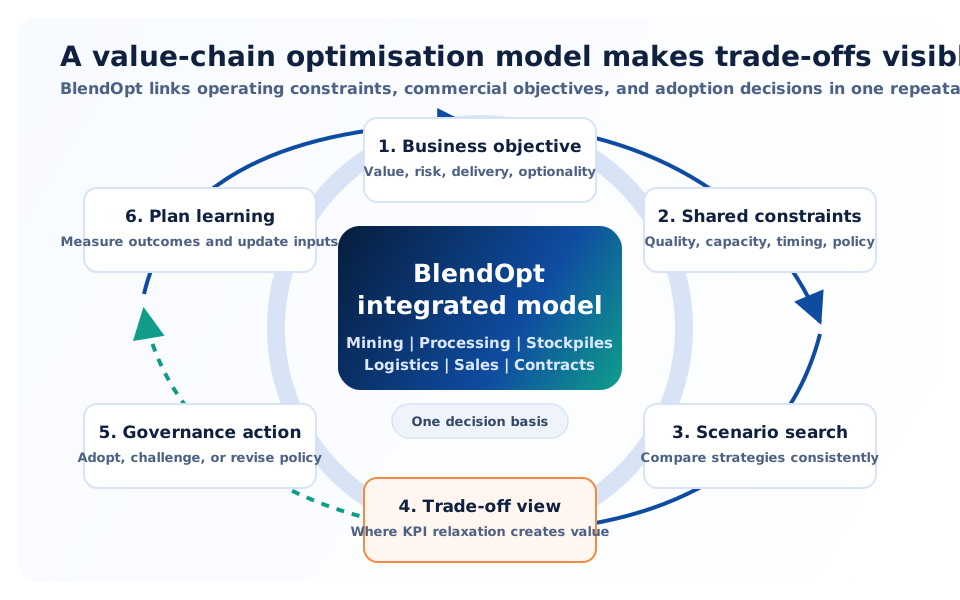
BlendOpt helps mining teams evaluate decisions across the value chain using a single integrated planning framework. Rather than optimising mining, processing, logistics, stockpiling, and sales in isolation, BlendOpt can represent the relationships between these decisions and identify strategies that better align with business objectives.
This is important because the value of a decision often depends on decisions made elsewhere. A processing decision can change yield, product quality, stockpile composition, saleable tonnes, rail requirements, and contract delivery risk. A sales decision can change which mining areas should be prioritised, how stockpiles should be managed, and whether plant capacity should be preserved or consumed. A logistics decision can influence whether a product strategy is practical within the available timing and infrastructure.
BlendOpt supports better decision making by allowing teams to model constraints, test scenarios, and compare alternatives on a consistent basis. It can help expose when a local KPI is driving a decision that appears efficient within one department but reduces value elsewhere in the system.
The objective is not to remove local expertise. The objective is to make trade-offs visible. When decision makers can see the financial, quality, timing, and operational consequences of different strategies, they can have more productive conversations about which constraints matter, which policies should be challenged, and which compromises are justified.
Practical examples of hidden value constraints
In a processing-constrained operation, the immediate assumption may be that the highest value opportunity is to maximise CHPP utilisation. However, an integrated plan may show that the plant should not treat all available material equally. Preserving capacity for particular seams, qualities, campaigns, or future product requirements may generate a better outcome than simply maximising plant hours in the current period.
In a stockpile-constrained value chain, the limiting factor may be the ability to separate, reclaim, and blend material at the right time. The operation may appear to have adequate tonnes, processing capacity, and logistics capacity, while still being unable to create the optimal product mix because stockpile policies have reduced optionality.
In a marketing-led product strategy, the organisation may assume a fixed product slate because it is familiar, easy to communicate, or aligned with established customer relationships. However, if the resource, market, and logistics conditions have changed, a fixed product strategy may prevent the business from considering higher value alternatives.
In a multi-mine coal operation, the apparent challenge may be rail or port utilisation. A deeper analysis may show that product quality, sulphur, timing, or blending compatibility is the more important constraint. In this situation, improving logistics efficiency alone may not unlock value unless the product and resource allocation strategy also changes.
From optimisation result to organisational change
Optimisation can identify better plans, but value is only captured when the organisation can act on the insight. This is where organisational blockers become important.
If a technically better plan requires a lower washplant utilisation, will the organisation accept it? If the best product strategy requires marketing to adjust a sales assumption, is there a process to evaluate that change? If the optimal result depends on preserving stockpile capacity for a future campaign, will short-term operational pressure override that decision? If a plan improves enterprise margin but worsens a departmental KPI, how will the decision be judged?
These are not software questions alone. They are governance, planning, and performance management questions. A successful optimisation project therefore needs both a robust technical model and a practical pathway for decision adoption.
Paradyn’s role is to help clients define the right optimisation problem, represent the relevant value-chain constraints, and create decision support that is transparent enough for teams to understand, challenge, and use. BlendOpt can help reveal where value is being lost, but leadership must decide whether the policies, KPIs, and planning assumptions that created those losses should change.
Conclusion
Mining organisations do not lose value only because they lack data or optimisation capability. They can also lose value because their internal performance measures encourage the wrong decisions. Local KPIs can make departments more efficient while making the value chain less profitable, less flexible, or more exposed to quality and delivery risk.
The first step is to identify the real constraint. The second is to test whether existing policies, practices, and KPIs are helping or hindering the organisation’s ability to respond. The third is to use integrated planning tools to compare alternatives and make trade-offs visible across mining, processing, logistics, stockpiling, and sales.
BlendOpt supports this process by helping mining teams move beyond siloed optimisation and towards value-chain decisions that reflect the commercial, operational, and physical reality of the business. The result is not just a better plan. It is a better way to decide what should be optimised in the first place.
Would you like to know more?
Are your local KPIs aligned with whole-of-business value?
Do you know whether your perceived bottleneck is the true value constraint?
Can your planning process test when lower asset utilisation creates a better commercial outcome?
Are stockpile, quality, logistics, and sales constraints considered together in your planning decisions?
Do your product strategies reflect current market and resource conditions, or historical assumptions?
Can you identify which internal policies may be limiting optimisation value?
Can your teams compare alternative mine-to-market strategies quickly enough to influence decisions?
Does your planning process make value-chain trade-offs visible across technical services, processing, logistics, and marketing?